Investing Basics for Beginners
Investing is one of the most powerful tools for building wealth and achieving financial freedom. Many people believe investing is only for wealthy individuals or financial experts, but the reality is that anyone can start investing with a small amount of money. Understanding investing basics can help you make smarter financial decisions and create a secure future for yourself and your family.
In simple terms, investing means putting your money into assets that have the potential to increase in value over time. Instead of letting your money sit in a savings account earning minimal interest, investing allows your money to work for you. While investing involves some risk, it also offers the opportunity for significantly higher returns over the long term.
What Is Investing?
Investing is the process of purchasing assets with the expectation that they will generate income or grow in value. Investors aim to increase their wealth through capital appreciation, dividends, interest payments, or rental income.
There are many different types of investments available today. Some of the most popular options include stocks, bonds, mutual funds, exchange-traded funds (ETFs), real estate, and even cryptocurrencies. Each investment type comes with its own level of risk and potential reward.
The key goal of investing is to grow your money over time while managing risk appropriately.
Why Is Investing Important?
Many people rely solely on savings accounts to protect their money. While saving is important, it may not be enough to achieve long-term financial goals because inflation gradually reduces the purchasing power of cash.
Investing helps your money grow faster than inflation and provides several important benefits:
Wealth Creation
Investing can help you build substantial wealth over time through consistent contributions and compound growth.
Financial Independence
A well-planned investment strategy can generate passive income and reduce dependence on a regular paycheck.
Retirement Planning
Investing allows individuals to prepare for retirement and maintain their desired lifestyle later in life.
Achieving Major Financial Goals
Investments can help fund important goals such as buying a home, starting a business, paying for education, or traveling.
Types of Investments
Stocks
Stocks represent ownership in a company. When you purchase shares, you become a partial owner of that business.
Stocks offer the potential for significant long-term growth. Many investors build wealth by investing in strong companies and holding their shares for years.
Advantages:
- High growth potential
- Dividend income opportunities
- Easy to buy and sell
Disadvantages:
- Market volatility
- Higher risk compared to some other investments
Bonds
Bonds are loans made to governments or corporations. Investors receive interest payments in return.
Bonds are generally considered safer than stocks but usually provide lower returns.
Mutual Funds
Mutual funds pool money from many investors to purchase a diversified portfolio of assets.
Professional fund managers handle investment decisions, making mutual funds a popular choice for beginners.
Exchange-Traded Funds (ETFs)
ETFs are similar to mutual funds but trade on stock exchanges like individual stocks.
They offer diversification, lower fees, and flexibility, making them attractive for new investors.
Real Estate
Real estate investing involves purchasing property to generate rental income or profit from appreciation.
Although real estate can provide excellent returns, it often requires larger amounts of capital.
Understanding Risk and Return
One of the most important investing basics is understanding the relationship between risk and return.
Generally, investments with higher potential returns carry greater risk. For example, stocks can provide impressive long-term growth but may experience significant short-term price fluctuations. On the other hand, bonds are typically more stable but offer lower returns.
Successful investors understand their risk tolerance and choose investments that align with their financial goals and time horizon.
The Power of Compound Interest
Compound interest is often called the eighth wonder of the world because of its ability to accelerate wealth growth.
Compounding occurs when investment earnings generate additional earnings over time.
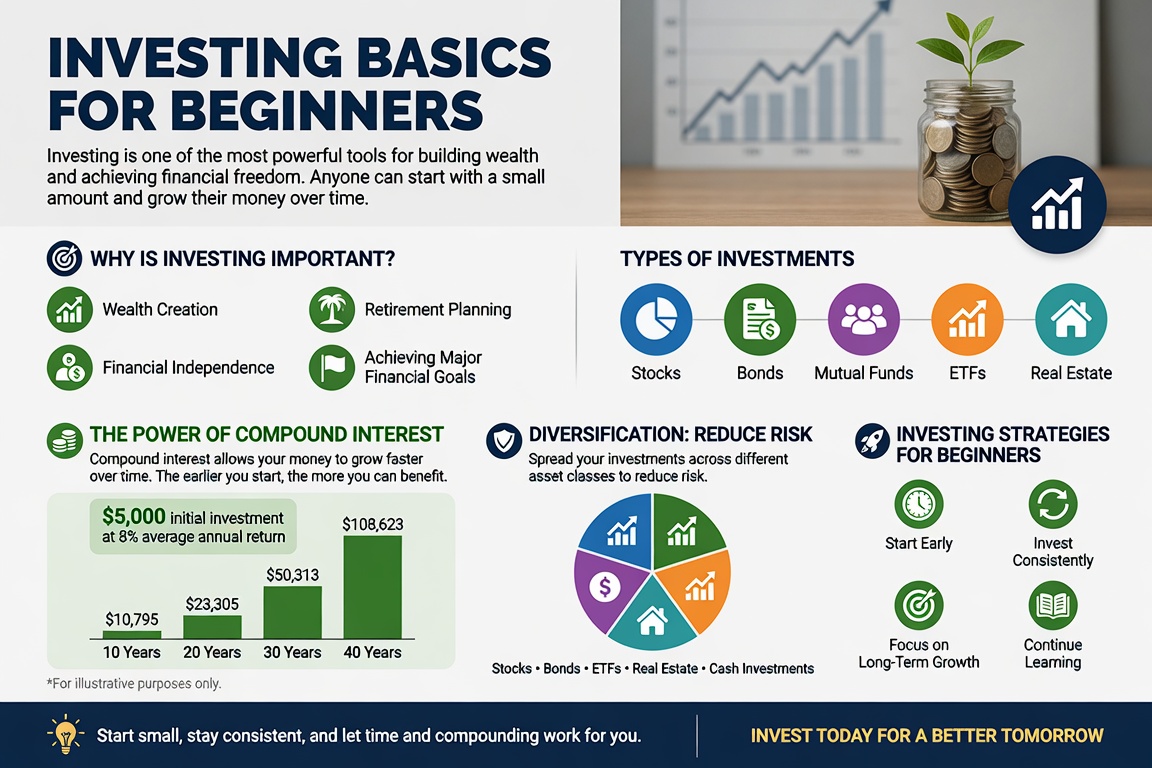
For example, if you invest $5,000 and earn an average annual return of 8%, your money continues growing not only on the original investment but also on previous gains.
The earlier you start investing, the more powerful compounding becomes. Even small investments made consistently can grow into substantial amounts over several decades.
Diversification: Reducing Investment Risk
Diversification is a strategy that involves spreading investments across different asset classes and industries.
Instead of putting all your money into a single stock or investment, diversification helps reduce risk by ensuring that poor performance in one area does not severely impact your overall portfolio.
A diversified portfolio may include:
- Stocks
- Bonds
- ETFs
- Real Estate
- Cash Investments
Many financial experts consider diversification one of the most important principles of successful investing.
Investing Strategies for Beginners
Start Early
Time is one of the most valuable assets in investing. Starting early gives your investments more time to benefit from compound growth.
Invest Consistently
Regular contributions can help smooth out market fluctuations and build wealth steadily over time.
Focus on Long-Term Growth
Short-term market movements can be unpredictable. Successful investors typically focus on long-term goals rather than daily market changes.
Continue Learning
Financial markets constantly evolve. Improving your financial knowledge can help you make better investment decisions.
Common Investing Mistakes to Avoid
Many beginners make avoidable mistakes when they first start investing.
Some common errors include:
- Trying to time the market
- Investing based on emotions
- Chasing quick profits
- Ignoring diversification
- Failing to research investments
- Selling during market downturns
Avoiding these mistakes can significantly improve your chances of long-term success.
Conclusion
Understanding investing basics is the first step toward building long-term wealth and achieving financial security. Investing allows your money to grow, helps protect against inflation, and supports important life goals such as retirement and financial independence.
Whether you choose stocks, bonds, ETFs, mutual funds, or real estate, the most important thing is to start early, remain consistent, and maintain a long-term perspective. Successful investing is not about getting rich quickly; it is about making smart decisions and allowing time and compound growth to work in your favor.