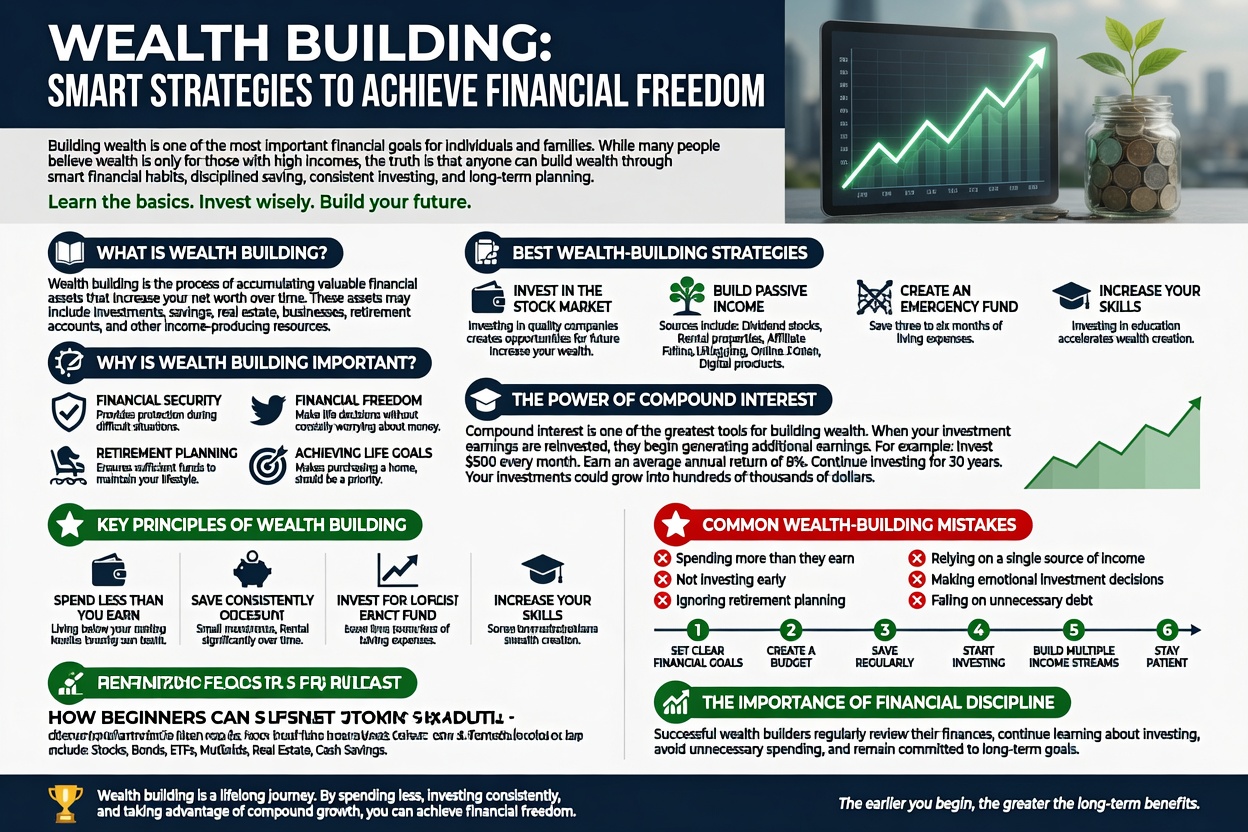
Building wealth is one of the most important financial goals for individuals and families. While many people believe wealth is only for those with high incomes, the truth is that anyone can build wealth through smart financial habits, disciplined saving, consistent investing, and long-term planning.
Wealth building is not about becoming rich overnight. Instead, it is a gradual process of increasing your assets, reducing unnecessary debt, and making wise financial decisions over time. Whether you are just starting your financial journey or looking to improve your money management skills, understanding the fundamentals of wealth building can help you achieve lasting financial security.
What Is Wealth Building?
Wealth building is the process of accumulating valuable financial assets that increase your net worth over time. These assets may include investments, savings, real estate, businesses, retirement accounts, and other income-producing resources.
Unlike earning a salary, wealth building focuses on making your money work for you. The goal is to create financial stability and generate multiple income streams that continue to grow year after year.
Why Is Wealth Building Important?
Building wealth provides many long-term benefits that go beyond simply having more money.
Financial Security
Unexpected emergencies, job loss, or medical expenses can happen at any time. Having financial assets provides protection during difficult situations.
Financial Freedom
Wealth allows you to make life decisions without constantly worrying about money. You can choose your career, travel, retire comfortably, or support your family with greater confidence.
Retirement Planning
Building wealth throughout your working years ensures that you have sufficient funds to maintain your lifestyle after retirement.
Achieving Life Goals
Whether you want to purchase a home, start a business, pay for education, or travel the world, wealth building makes these goals more achievable.
Key Principles of Wealth Building
Successful wealth builders follow several important financial principles.
Spend Less Than You Earn
One of the simplest yet most effective strategies is living below your means. Saving a portion of every paycheck creates opportunities for future investments.
Save Consistently
Building wealth begins with regular saving. Even small monthly contributions can grow significantly over time.
Invest for Long-Term Growth
Investing in assets such as stocks, ETFs, mutual funds, and real estate allows your money to grow faster than keeping it in a regular savings account.
Avoid High-Interest Debt
Credit card debt and expensive loans reduce your ability to build wealth. Paying off high-interest debt should be a priority.
Best Wealth-Building Strategies
Invest in the Stock Market
The stock market has historically provided strong long-term returns. Investing in quality companies or diversified index funds can help increase your wealth over time.
Build Passive Income
Passive income sources continue generating money even when you are not actively working.
Examples include:
- Dividend stocks
- Rental properties
- Affiliate marketing
- Blogging
- Online courses
- Digital products
Multiple passive income streams strengthen financial stability.
Create an Emergency Fund
An emergency fund prevents you from relying on debt during unexpected situations. Most financial experts recommend saving three to six months of living expenses.
Increase Your Skills
Investing in education and professional development can increase your earning potential and accelerate wealth creation.
The Power of Compound Interest
Compound interest is one of the greatest tools for building wealth.
When your investment earnings are reinvested, they begin generating additional earnings. Over many years, this creates exponential growth.
For example:
- Invest $500 every month.
- Earn an average annual return of 8%.
- Continue investing for 30 years.
Your investments could grow into hundreds of thousands of dollars through the power of consistent investing and compound returns.
The earlier you begin, the greater the long-term benefits.
Diversification Helps Protect Wealth
Diversification means spreading your investments across different asset classes rather than putting all your money into one investment.
A diversified portfolio may include:
- Stocks
- Bonds
- ETFs
- Mutual Funds
- Real Estate
- Cash Savings
Diversification reduces overall investment risk while improving long-term stability.
Common Wealth-Building Mistakes
Many people struggle to build wealth because they make avoidable financial mistakes.
Common mistakes include:
- Spending more than they earn
- Not investing early
- Ignoring retirement planning
- Relying on a single source of income
- Making emotional investment decisions
- Failing to create a budget
- Taking on unnecessary debt
Avoiding these mistakes can significantly improve your financial future.
How Beginners Can Start Building Wealth
If you are new to personal finance, follow these practical steps:
Step 1: Set Clear Financial Goals
Identify both short-term and long-term financial objectives.
Step 2: Create a Budget
Track your monthly income and expenses to identify opportunities for saving.
Step 3: Save Regularly
Make saving a habit by setting aside part of every paycheck.
Step 4: Start Investing
Begin investing in diversified assets such as index funds, ETFs, or quality stocks.
Step 5: Build Multiple Income Streams
Look for opportunities to generate passive income through investments or online businesses.
Step 6: Stay Patient
Wealth building requires consistency and long-term thinking. Avoid chasing quick profits or risky investment schemes.
The Importance of Financial Discipline
Financial discipline is often the biggest difference between those who build wealth and those who struggle financially.
Successful wealth builders regularly review their finances, continue learning about investing, avoid unnecessary spending, and remain committed to long-term goals.
Remember that small, consistent actions often produce greater results than occasional large investments.
Conclusion
Wealth building is a lifelong journey that requires planning, patience, and disciplined financial habits. By spending less than you earn, investing consistently, creating passive income, avoiding unnecessary debt, and taking advantage of compound growth, you can steadily increase your net worth and achieve financial freedom.
No matter your current income level, the best time to begin building wealth is today. Small financial decisions made consistently over many years can lead to significant long-term success and provide the security needed to enjoy a comfortable future.